
Why Calgary Ice Is Worse Than the Snow
 Written by Su Diab August 28, 2026 · 5 min read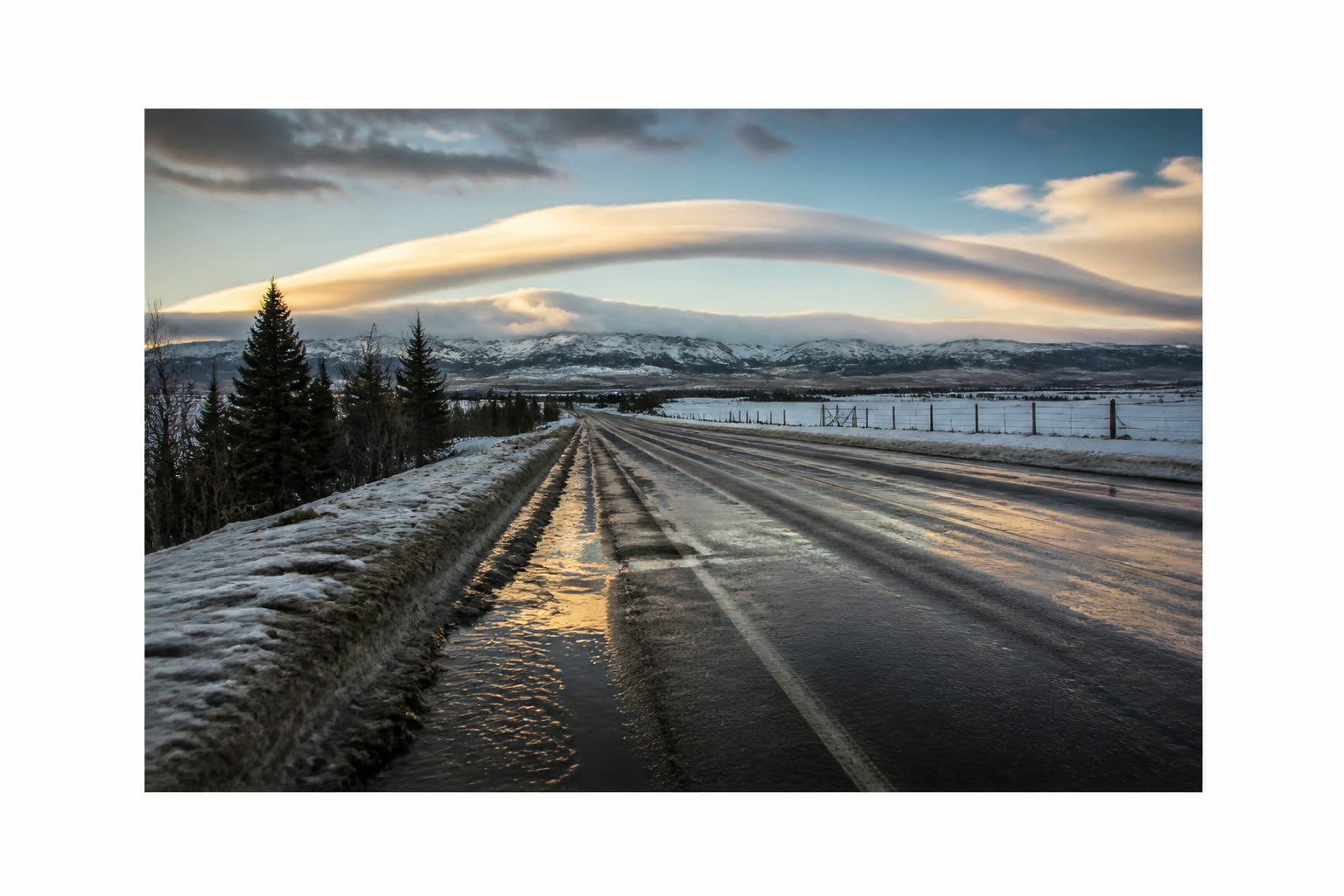
This article is for you if...
- Anyone who has cleared a driveway and found it icy the next morning
- Property owners wondering why their plowed lot still had a fall
- People new to Calgary winters
Quick Answer
Warm chinook winds melt snow during the day, then temperatures drop overnight and the meltwater refreezes as clear ice. A surface cleared perfectly in the afternoon can be dangerous by morning with no new snowfall, which is why ice control matters more here than snow clearing alone.
Most cities fight snow. Calgary fights what happens to snow after it melts.
That difference explains why a driveway you cleared perfectly on Tuesday afternoon can be a skating rink on Wednesday morning without a single new flake falling, and why plow-only snow removal leaves the riskiest mornings uncovered.
What is actually happening
A chinook is a warm, dry wind that descends from the mountains and can lift Calgary’s temperature above freezing in a matter of hours, even in the depths of January.
The sequence goes:
- Afternoon. Temperature climbs above zero. The top layer of snow melts. Water runs across driveways, walkways and lots, and collects wherever the surface is low or shaded.
- Evening. Temperature falls back below zero.
- Overnight. That meltwater refreezes, often as a thin, smooth, transparent layer.
- Morning. Someone walks out onto it.
The ice this produces is genuinely more dangerous than snow, for three reasons:
It is hard to see. Thin clear ice on dark asphalt or grey concrete looks wet, not frozen. People adjust how they walk on visible snow. They do not adjust for something they cannot see.
It is smooth. Refrozen meltwater forms a flatter, slicker surface than packed snow, which at least has texture.
It appears after the service visit. The plow came, did the job properly, and left. The hazard formed six hours later.
Why this makes clearing alone insufficient
If snow removal is defined as moving snow, then the job was done. The snow was moved.
But the surface that injured someone at 7am was not snow. It was water that used to be snow.
This is the single most useful thing to understand about Calgary winter maintenance: clearing and ice control are two different jobs, and here you need both. A contract covering only the first leaves you exposed on exactly the mornings that produce claims.
The bylaw angle
Calgary requires the public sidewalk bordering your property to be cleared to bare surface within 24 hours of snowfall ending.
Read that standard carefully. It is not “cleared of snow.” It is bare surface. Ice counts against you.
So a property can be fully compliant at 4pm and non-compliant by 7am the next morning without any new snowfall. Fines escalate at $250, then $500, then $750 within a twelve month period, and if the City clears it for you there is a minimum $150 plus GST charge plus administration fees added to your property taxes.
Where the ice forms first
If you are checking your own property, these spots freeze earliest and hardest:
- Below downspouts. Roof meltwater discharges and runs across a walkway. This is the most common homemade ice patch in Calgary.
- Shaded areas. North-facing walks and spots shadowed by fences or buildings stay frozen while everything else thaws, so they collect water that never gets a chance to evaporate.
- Low points and dips. Meltwater pools, then freezes thicker than anywhere else.
- The bottom of sloped driveways. Water runs downhill and freezes at the apron, right where the car needs traction.
- Near snow piles. Piles melt from the base during a chinook and the runoff refreezes across whatever is downhill of them.
- Entrances. Foot traffic carries snow in, it melts, and refreezes into a polished patch right at the door.
What actually works
Clear early and clear completely. Snow left to be walked or driven on compacts into a dense layer that bonds to the surface. Once that happens, you are chipping rather than clearing, and it becomes the base for the next ice layer.
Get to bare surface. A thin layer of packed snow left behind is a head start for the next freeze.
Apply ice control before the freeze, not after. Treating a surface ahead of an overnight drop stops the bond forming. Treating solid ice the next morning works, but slowly and with more product.
Fix the water source where you can. Extending a downspout so it discharges away from the walkway removes the ice patch permanently rather than treating it weekly all winter.
Check after a chinook, not just after snow. This is the habit almost nobody has. Most people check the property when it snows. In Calgary the more dangerous morning often follows a warm day.
Frequently asked questions
What is a chinook? A warm, dry wind coming down off the mountains that can raise Calgary’s temperature above freezing quickly, even mid-winter.
Why is refrozen ice more dangerous than snow? It is smooth, often transparent on dark surfaces, and forms after clearing has already been done, so nobody is expecting it.
Does the bylaw count ice? Yes. The standard for public sidewalks is bare surface within 24 hours of snowfall ending, and ice does not meet that.
Should I salt before or after freezing? Before, where practical. Treating ahead of an overnight drop prevents the bond forming and uses less product than breaking up ice afterwards.
Where should I check first on my property? Below downspouts, in shaded spots, at low points, at the base of sloped driveways and near snow piles.
Handling it without thinking about it
Our residential snow removal plans include ice control as part of the service rather than as an extra line, specifically because of the cycle described above. Clearing snow alone does not address the hazard that actually forms here.
For businesses, where the exposure is larger, commercial snow removal covers parking areas, entrances and walkways with ice control, and response times are written into each contract rather than left vague.
Su Diab
Owner, Golden Angel Snow Removal
- Running Calgary snow removal crews since 2021
- 10 years experience in landscaping
- Licensed, insured and WCB covered
Su has run snow removal crews in Calgary since 2021, following ten years in the landscaping industry. He works on the properties himself and sets the standard the crews work to.